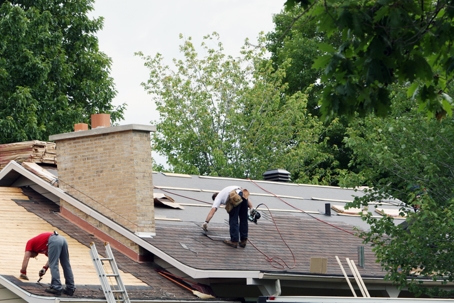
You can stand in your driveway, look up at a neat row of shingles, and still have no idea that your roof is quietly rotting or leaking in places you cannot see. Many East Trenton homeowners do not think about their roof until they notice a ceiling stain or water dripping during a storm. By the time those signs appear, inspectors often find problems that have been developing for months or even years in the layers hidden beneath the surface.
Across New Jersey, roofs face constant stress from hot summers, cold winters, Nor’easters, and heavy rain that test every seam and nail. Older homes and additions bring their own quirks, including multiple roof lines, aging chimneys, and flat sections that require special care. When inspectors walk East Trenton roofs, they tend to see the same patterns repeatedly, which means your home may have similar weak spots even if everything looks fine from the street.
At Joe The Roofer, we work on New Jersey roofs year-round and see how climate and past workmanship combine to create common hidden problems. Our family-owned team is trained to look beyond missing shingles and identify the root causes that shorten a roof’s lifespan. In this guide, we break down the most common roof problems we find during East Trenton inspections, explain why they happen, and show what homeowners should watch for.
Why East Trenton Roofs Hide Problems Until It Is Almost Too Late
An asphalt shingle roof is a complete system, not just a layer of shingles. Beneath those shingles are underlayment, decking, fasteners, and flashing around penetrations and walls. During inspections, we often find these hidden components beginning to fail even while the shingles still look acceptable from the ground.
Moisture slowly makes its way under the surface and begins breaking down wood and metal. New Jersey weather accelerates this process. Heavy wind-driven rain pushes water sideways into joints and seams. In winter, melting snow can refreeze near roof edges or around cooler surfaces, expanding slightly each time and widening tiny gaps. Summer heat then bakes shingles and sealants, causing them to crack as they cool.
Many homeowners assume that if there is no ceiling stain, there is no roof problem. In reality, moisture can remain inside the roof system long before it appears indoors. Insulation can absorb small leaks for a long time, and water often travels along rafters or framing before becoming visible. During inspections around East Trenton, we frequently find rotted decking, rusty nails, or mold in attics where the rooms below still appear perfectly dry.
Because we take a proactive approach, our inspections focus on these hidden areas. In this climate, roof problems rarely start with a visible hole. They usually begin as subtle changes in the roof system that signal water slowly working its way inside.
Damaged Shingles & Granule Loss From Sun And Storms
Shingles are the roof’s first line of defense, and inspectors commonly see the same signs of wear on aging or storm-exposed roofs. Curled edges, cracked tabs, and missing shingles often appear on slopes exposed to strong sun or wind. Another common clue is the buildup of small sand-like granules in gutters or downspouts.
Asphalt shingles depend on mineral granules to protect the asphalt from ultraviolet rays and impact. Over time, sun exposure and temperature swings loosen those granules. Strong sun on south- and west-facing slopes in New Jersey often accelerates the process. Once granules wear away, the asphalt underneath becomes exposed to sunlight and rain, causing shingles to become brittle and more likely to crack or curl.
Wind adds another layer of damage. Shingles are designed with a seal strip that bonds each row together. Strong winds from Nor’easters or summer storms can lift the edges, breaking that bond even if the shingles remain in place. From the ground, the roof may still look normal, but inspectors often find rows of loosened shingles that are now vulnerable to future storms.
During inspections, we look closely at granule buildup, seal strip adhesion, and overall shingle condition. Catching early wear often allows for targeted repairs before leaks begin.
Chimney, Skylight & Wall Flashing Failures
Flashing is one of the most common sources of leaks we find during East Trenton inspections. Flashing is the metal that seals transitions where roofs meet vertical walls, chimneys, skylights, or vent pipes. These areas are natural weak points, and when flashing ages or is installed incorrectly, water finds its way inside.
On many older New Jersey roofs, step flashing along walls was reused during previous roof replacements or installed incorrectly. Chimney counterflashing may be set too shallow into mortar joints, or seams may rely heavily on caulk that eventually cracks. Around skylights and vent pipes, rubber boots can split or metal can rust, creating small gaps that are nearly impossible to see from the ground.
Wind-driven rain often exposes these problems. Instead of falling straight down, rain can blow sideways under shingle edges and into flashing seams. Once water gets behind flashing, it may travel along framing before appearing inside the home months later.
Because flashing issues are so common, our inspections spend extra time examining these transitions. In many cases, the shingles themselves are not the real problem. The leak started years earlier due to flashing shortcuts during installation.
Attic Ventilation Problems That Shorten Roof Life
Some roof problems begin inside the attic rather than on top of the roof. Poor ventilation can quietly shorten the life of shingles and decking by years. During inspections in East Trenton, we often find overheated attics, rusted nails, and darkened roof sheathing even when the exterior roof still looks intact.
A healthy roof system requires balanced airflow. Cooler air should enter through soffit vents and exit through ridge vents or high vents. When intake vents are blocked or insufficient, hot air becomes trapped.
In summer, attic temperatures can climb far above outdoor temperatures. This heat bakes the underside of the roof deck and accelerates shingle aging. Shingles may blister, curl early, or lose flexibility.
In winter, warm humid air rising from the home can condense on the colder roof deck. That moisture can lead to mold growth, rusted nails, and weakened sheathing. Homeowners may notice higher energy bills or an unusually hot second floor before realizing the roof system is affected.
Because of this, we treat roofs as complete systems. Inspections often include a look inside the attic whenever possible to identify ventilation issues that could damage roofing materials over time.
Rotting Roof Decking & Soft Spots
The wood decking beneath shingles carries the actual structural load of the roof. During inspections in East Trenton, one of the more serious issues we encounter is soft or spongy decking when walking the roof.
Decking deterioration typically results from long-term moisture exposure. Small leaks from flashing, nail holes, or past ice dams can repeatedly wet the wood. Over time, fungi break down the fibers, reducing the wood’s strength. Nails may loosen, and the roof surface may sag slightly between rafters.
From inside the home, homeowners might notice ripples along the roofline or slightly wavy shingles. Sometimes there are no visible signs until repairs begin.
This is why professional roof inspections matter. A soft spot that can only be felt underfoot will never be visible from the ground. During replacement projects, we occasionally discover that previous installers placed new shingles over damaged decking, leaving the underlying issue unresolved.
At Joe The Roofer, we address decking issues directly because they affect the safety and lifespan of the roof.
Gutter & Roof Edge Problems
Roof edges near gutters and overhangs experience constant exposure to water and debris. During inspections in East Trenton, many roof problems begin in these areas.
Common signs include rotted fascia boards behind gutters, stained soffits, or curling shingles near the eaves. Sometimes homeowners notice water streaks on siding or gutters pulling slightly away from the house.
A properly designed roof edge directs water into gutters using drip edge metal. When gutters clog or slope incorrectly, water backs up and may run behind the gutter, soaking the wood behind it.
In winter, melting snow can refreeze near roof edges, forming ice buildup. Water trapped behind these areas can creep under shingles, repeatedly soaking the decking near the eaves. Over time, this causes rot and loose shingles.
When evaluating roof edges, we examine more than just shingles. We also check drip edge installation, gutter condition, and how water moves off the roof.
Storm Damage That Often Goes Unnoticed
After a storm, homeowners usually look for obvious damage like missing shingles or fallen branches. However, inspections in East Trenton often reveal subtle storm damage that homeowners never noticed.
High winds can flex shingles repeatedly, especially near ridges, corners, and roof edges. Even if the shingles settle back into place, the seal strip bond may break. Inspectors look for creased shingles that feel weakened along a bend.
Debris impact is another concern. Branches or wind-blown objects can knock granules off shingles without puncturing them. Those exposed spots weather faster and eventually become leak points.
Because of this, we recommend inspections after major wind or rain events even if the roof appears intact. Catching minor storm damage early often prevents more serious leaks later.
What To Do If An Inspection Finds Roof Problems
Learning that your roof has hidden issues can feel overwhelming, especially if repairs were not expected. The first step is understanding which problems require immediate attention and which can be planned for.
Active leaks, major flashing failures, or severe decking damage typically need prompt repairs. Other issues, such as moderate granule loss or early ventilation concerns, may allow time for planning and budgeting.
A thorough inspection should include photos, explanations of each issue, and clear repair options. This information helps homeowners make informed decisions and discuss possible storm-related claims with insurance companies.
At Joe The Roofer, our process focuses on clear communication and prompt service. We inspect the full roof system—from shingles and flashing to attic ventilation when accessible—so homeowners understand the real condition of their roof.
If a recent inspection or storm has raised questions about your roof, you do not have to figure it out alone. A local roofing team can help you understand what is happening above your head and what to do next.
Call (732) 490-7733.